




 Date:
26 oct., 2026
 Classic Motorcycles
 Publié par
Super Admin
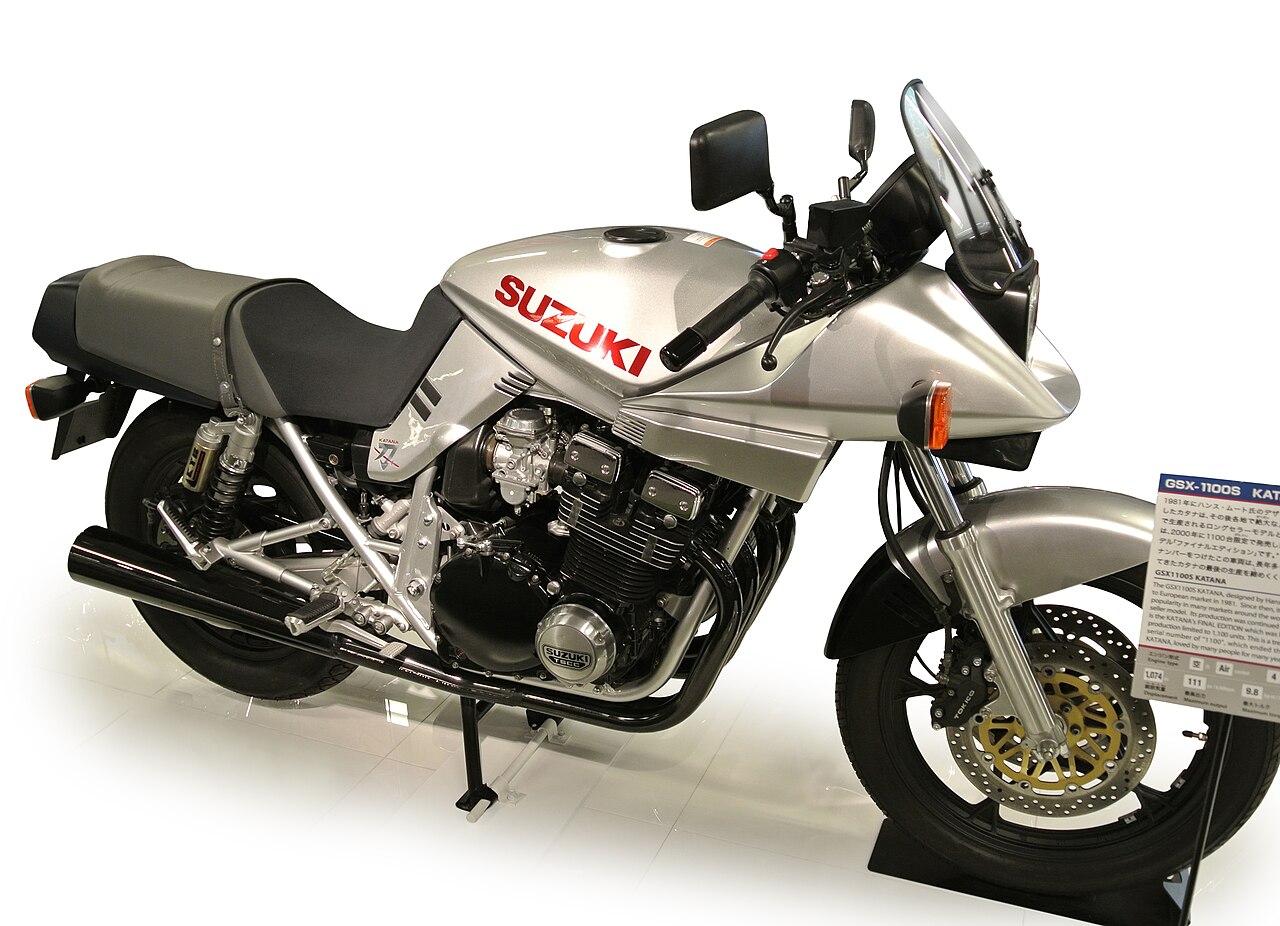
Park a 1981 Suzuki Katana next to anything else on the road that year and it still looks like it fell out of a different decade. Most Japanese fours of the late seventies were round-everything affairs, soft curves wrapped around an engine nobody was trying to show off. Suzuki showed up with a silver wedge that had a beak for a headlight fairing and a tank shaped like a knife blade, and the rest of the industry spent the next few years catching up. For decades afterward the GSX1100S Katana stayed cheap and easy to find rough. That's changing now, and it's worth understanding why.
A Design Brief Suzuki Didn't Trust Itself With
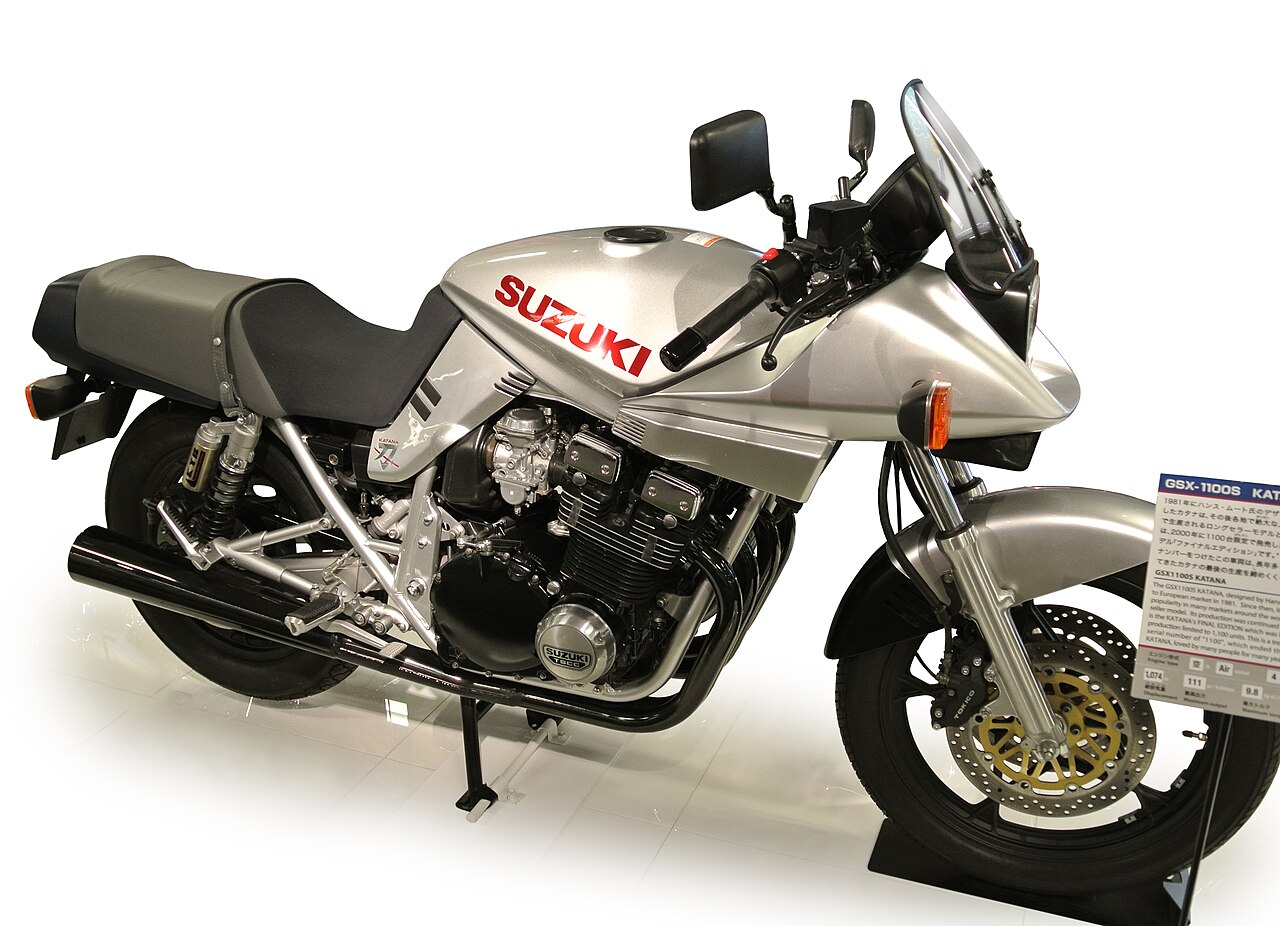
The Katana exists because Suzuki admitted it had a problem. The 1979 GSX1100E was mechanically sound but styled like nothing in particular, so Suzuki went outside to a small German studio, Target Design, run by Hans Muth, previously BMW's styling chief. Muth brought in Jan Fellstrom and Hans-Georg Kasten, and the trio worked through a prototype called ED-1 before landing on ED-2, the shape that became the Katana. It was shown as a mock-up at the Cologne show in 1980 and rushed into production by the following summer.
The Flyline and Why It Still Reads as Modern
Muth called the design language the "flyline" - one continuous thread running from the headlight through the tank, down the seat, and off the tail, with a tank crease nobody else was doing in 1981. Credit for the actual pencil work gets disputed - Kasten has said in later interviews that Muth opened the door at Suzuki while Fellstrom and Kasten did most of the drawing - but Muth is the name that stuck, and it's the one you'll see in most of the Katana folklore today.
What Suzuki Actually Built
Strip away the styling story and you've still got a genuinely quick machine. The GSX1100S ran a 1075cc air-cooled, DOHC, 16-valve inline four claimed at around 110 horsepower, in a dry weight of roughly 232 kg (about 512 lbs). Suzuki marketed it as the fastest production motorcycle in the world at launch, and Cycle Canada's track testing backed that up with a recorded 237 km/h (147 mph), ahead of the standard GSX1100E and the Kawasaki GPz1100. Other period testers measured closer to 135-143 mph, a reminder that "fastest production bike" claims deserve a healthy squint. Either way, a quarter-mile in the high 11s was properly quick for a bike you could ride to work.
Why It Stayed Affordable for Four Decades
Bikes like the Kawasaki Z1 got collector attention relatively early. The Katana didn't, partly because its styling was polarizing rather than universally adored, and partly because a lot of them got ridden hard and badly repainted rather than preserved. Original bodywork is brittle and scarce now, with reproduction panels nowhere near as good as what you'd find for a Ducati 916. A no-reserve sale through Iconic Motorbike Auctions in late 2023 moved a tidy, imported 1985 GSX1100S with just over 31,000 miles for $4,280 including fees - one real data point, not a market average. For a loose reference, Hagerty's valuation tool lists the earlier, smaller-engined GS1000S Katana at roughly $7,300 as of mid-2025. Different bike, but it shows values in this family have started moving.
The Problems Nobody Mentions in the Listing Photos
Carburetors
The GSX1100S runs four Mikuni BST36SS carbs, and after decades of sitting with old fuel in the bowls, gummed jets and sticky slides are close to universal rather than occasional. Rough idle and stalling are the usual symptoms, almost always fixable with a proper strip and clean. For the right diagnostic order, our guide to carburetor faults covers the sequence that actually saves time.
Charging system and rust
Stators and rectifier-regulators on early-eighties air-cooled Suzukis fail with some regularity, and a tired charging system often gets masked by a fresh battery before it comes back. Beyond that, watch for a seep around the rocker cover near the camchain tunnel, pitted exhaust headers, and fuel tanks that corrode from the inside after years of stale gas.
What You're Actually Paying For
- Project-grade, needs carbs and paint: low thousands, running but rough, gummed carbs and faded or repainted bodywork likely.
- Good, running, mostly original: later Japan-market GU76A Katanas from the early nineties tend to land around $9,000-$12,000 once converted from yen, a different chassis generation from the original 1981-83 GU51A.
- Rare European or UK-market survivors: unmolested original paint and documented history push well past those figures.
Whatever condition you're looking at, our collector's checklist applies directly here: VIN and frame number cross-check, cold-start behavior, play in the swingarm and steering head, and an honest look at how much bodywork is original versus reproduction.
Where This Leaves the Katana Today
The 2019 return of the Katana name on a modern GSX-S1000S-based bike put the original back in front of riders who'd never seen one in person, and that kind of attention tends to drag values upward over time. We've covered the broader shift toward younger Japanese bikes becoming genuine collectibles, and the Katana sits ahead of that curve rather than inside it, being a decade or more older than most bikes in that conversation. Check our market report for current direction, and look at the Suzuki GT250 currently listed to see the brand has more than one era worth attention. Browse what's actually up for bidding on live auctions and you'll get a real feel for where this market sits - rather than relying on anyone's theory about it, mine included.



Comment (00)