




 Datum:
2 nov., 2026
 Classic Motorcycles
 Geplaatst door
Super Admin
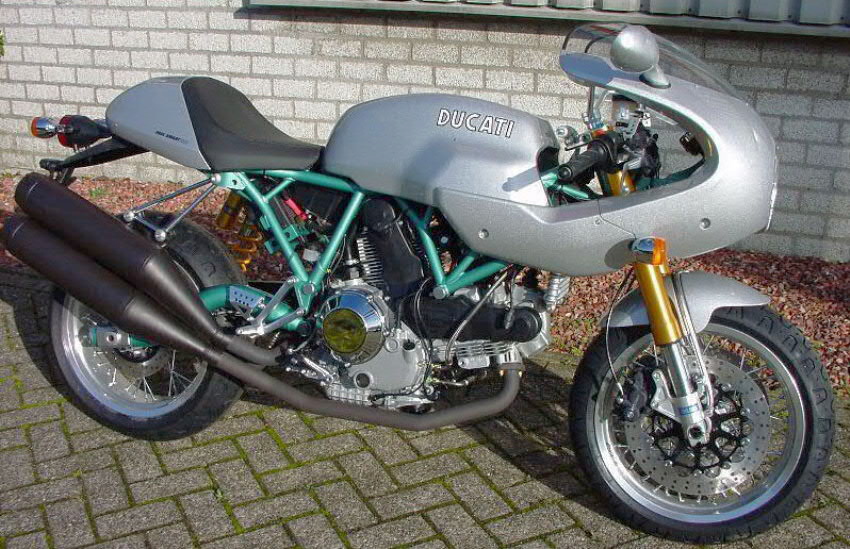
Paul Smart didn't actually ride a bike like this. The man won the 1972 Imola 200 on a works Ducati 750 Imola Desmo, a race that more or less saved Ducati's reputation in one afternoon, and it took Ducati until 2006 to build a road bike that properly traded on that memory. The result was the Paul Smart 1000LE, two thousand units built for a single model year, and it's aged into one of the more interesting modern classics on the market.
Where the styling comes from
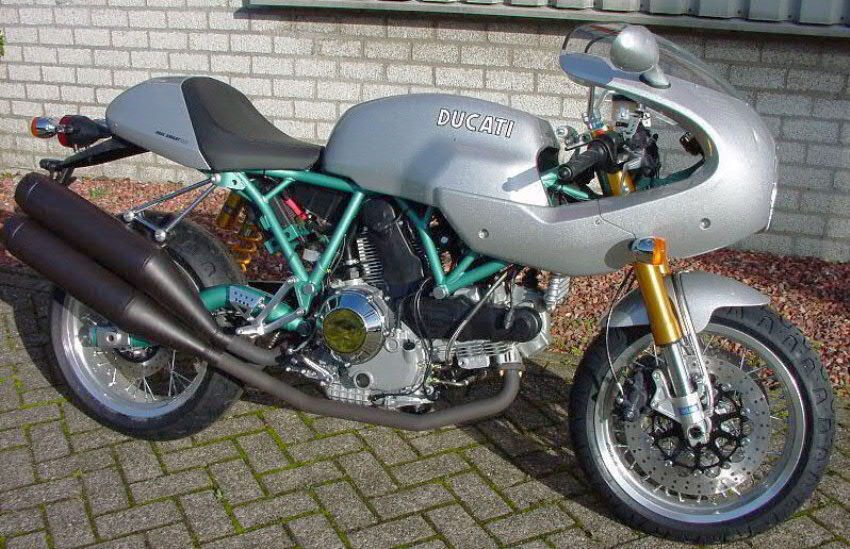
Pierre Terblanche designed the whole Sport Classic range for 2006, and the Paul Smart was the halo piece of three closely related bikes. The half-fairing, clip-ons, yellow-on-silver paint and single seat hump are a direct lift from the 750 Super Sport of the mid-1970s, and Ducati leaned hard into that nostalgia rather than disguise it as modern. The Sport Classic line sold slowly when new, oddly enough, but the Paul Smart has held up as the one people actually wanted.
Ducati Sport 1000 and GT1000
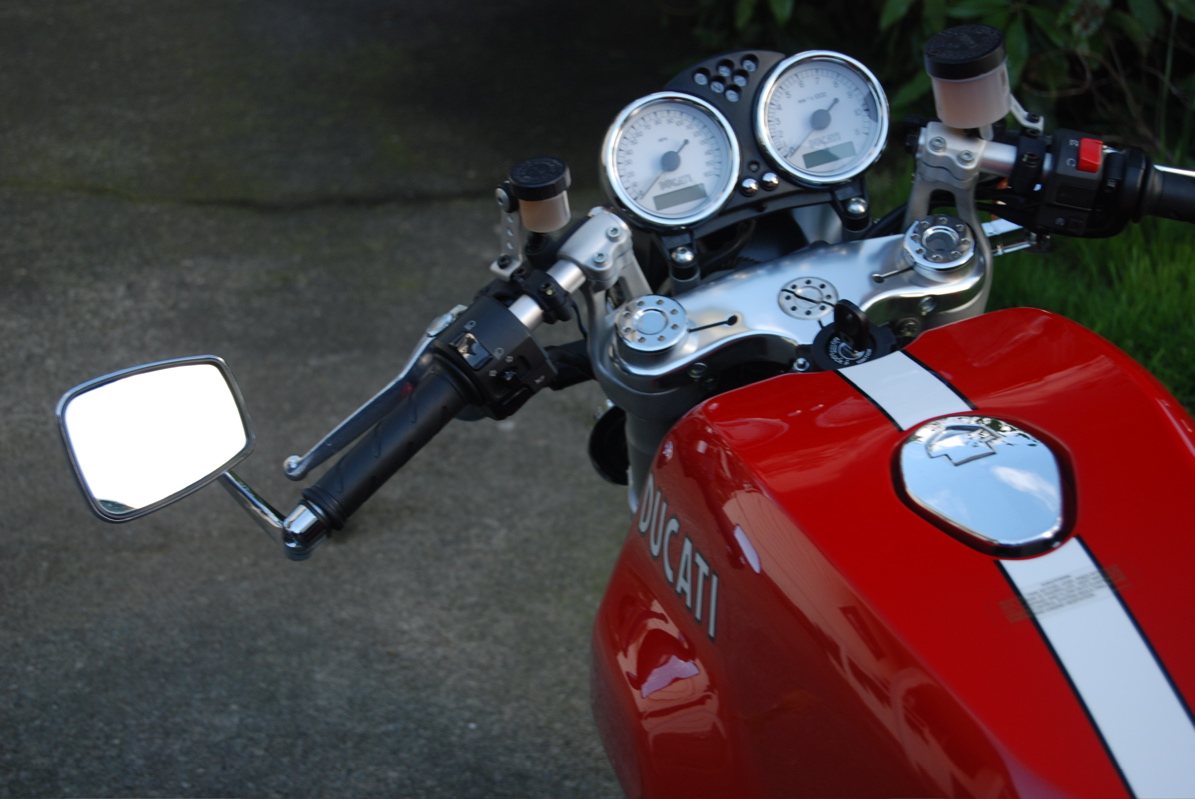
The other two bikes in the family share almost everything mechanical with the Paul Smart but sell for noticeably less. The Sport 1000 is the same half-faired look without the LE badge, and the GT1000 swaps the clip-ons for an upright bar and a passenger seat. Either is a sensible way into the same engine and chassis without paying the rarity premium.
The engine underneath the retro shell
Strip away the throwback bodywork and the Paul Smart runs Ducati's 992cc 1000DS, an air-cooled, dual-spark, desmodromic two-valve L-twin making a claimed 84hp. It's the same basic unit found in the Multistrada 1000DS and the Monster S4, which matters for parts and knowledge: you're not dealing with an orphan engine that only one specialist on earth understands. Top speed is around 135mph, modest next to a modern sportbike, but the point of this bike was never a spec sheet fight.
What owners actually report going wrong
I went looking through Ducati owner forums rather than relying on sales copy, because that's where the honest complaints live. A few issues come up again and again on the 1000DS platform.
Front cylinder spark problems
This is the one that shows up most. Owners describe the front cylinder cutting out, sometimes intermittently, with new plugs alone not fixing it. The usual suspects are the front stick coil, exposed to weather more than the rear one, and on some ECU revisions a coil driver fault that kills one cylinder's spark entirely. A crank sensor regap gets blamed too, but more than one owner found that wasn't the real cause, so a proper diagnostic read beats throwing parts at it.
Starter clutch, valve guides and that clutch rattle
A worn starter sprag clutch is an expensive repair since the engine cover has to come off to reach it. Some early examples of this engine also had valve guide trouble, one more reason to want service records rather than a seller's word that "it runs great." And a loose, rattling noise from the dry clutch at idle is normal on these; what isn't normal is a grinding feel pulling away, which points to dust or genuine basket wear.
What servicing actually costs
Desmodromic valve service and timing belt changes are the line items separating Ducati ownership from a Japanese inline-four. Figure on a valve check roughly every 10,000 to 12,000 miles, belts on a similar cycle, and budget a few hundred pounds or dollars for belts alone, more if the valves need adjusting too. It's not outrageous for the bracket, but it's not optional either. Buy from a seller who can show stamped service history and you remove most of the risk.
What they're actually selling for
A Paul Smart 1000LE sold on Bring a Trailer in August 2023 for $19,250, on a bike with close to 20,000 miles on it, which shows these don't need to be garage queens to bring strong money. Lower-mileage examples trade well above that, with sub-hundred-mile bikes reportedly bid as high as $27,250, and broader market tracking puts the realistic range for clean examples roughly between $12,000 and $20,000. Given these started around $16,000 new in 2006, that's a bike which has genuinely held value.
Where it sits among modern classics
The Paul Smart fits a wider trend worth watching if you're new to this corner of the hobby: bikes from the 1990s and 2000s built on either serious performance or serious nostalgia are quietly becoming the next wave of genuine collectibles, as we covered in our piece on 1990s and 2000s motorcycles as the next generation of collectibles. On the performance side of that same era, Honda's homologation specials tell a similar story, and our look at the Honda RVF400R NC35 covers a bike that went from cheap grey import to serious money for much the same reasons: limited numbers, real competition pedigree, and styling that hasn't dated.
Checking one over before you bid
If you're looking at one of these, there's a short list worth going through before you commit:
- Numbered plate - every Paul Smart LE carries a build number out of 2,000; check it matches the paperwork.
- Service records for belts and valves - ask for dates and mileage, not just a verbal "it's been looked after."
- Cold start behaviour - a front cylinder that's lazy to fire or drops out once warm is the spark issue described above, not a quirk to live with.
- Ohlins suspension condition - the fully adjustable Ohlins front and rear is a genuine selling point in good order, and expensive to sort when it isn't.
- Originality - these get modified more than you'd expect; a bike with the stock exhaust, clutch and bodywork tends to hold value better.
None of this makes the Paul Smart a difficult bike to own, and that's the point. It's a Ducati twin with the usual Ducati-twin quirks, wrapped in bodywork that still looks right fifteen-plus years after it was designed to look old on purpose. Have a look through our classic motorcycle listings to see what else is moving in this space, and if you're new to buying at auction, our how it works page walks through the process end to end.
Photo credit: Livnay Associates (CC BY-SA 3.0), Dennis Bratland, Dbratland (talk) 05:08, 16 February 2009 (U... (CC BY 3.0), Ronald Saunders from Warrington, UK (CC BY-SA 2.0), Livnay Associates (CC BY-SA 3.0)






Comment (00)