




 Datum:
1 Sep, 2026
Datum:
1 Sep, 2026 Vintage Bikes
 Geplaatst door
Super Admin
Geplaatst door
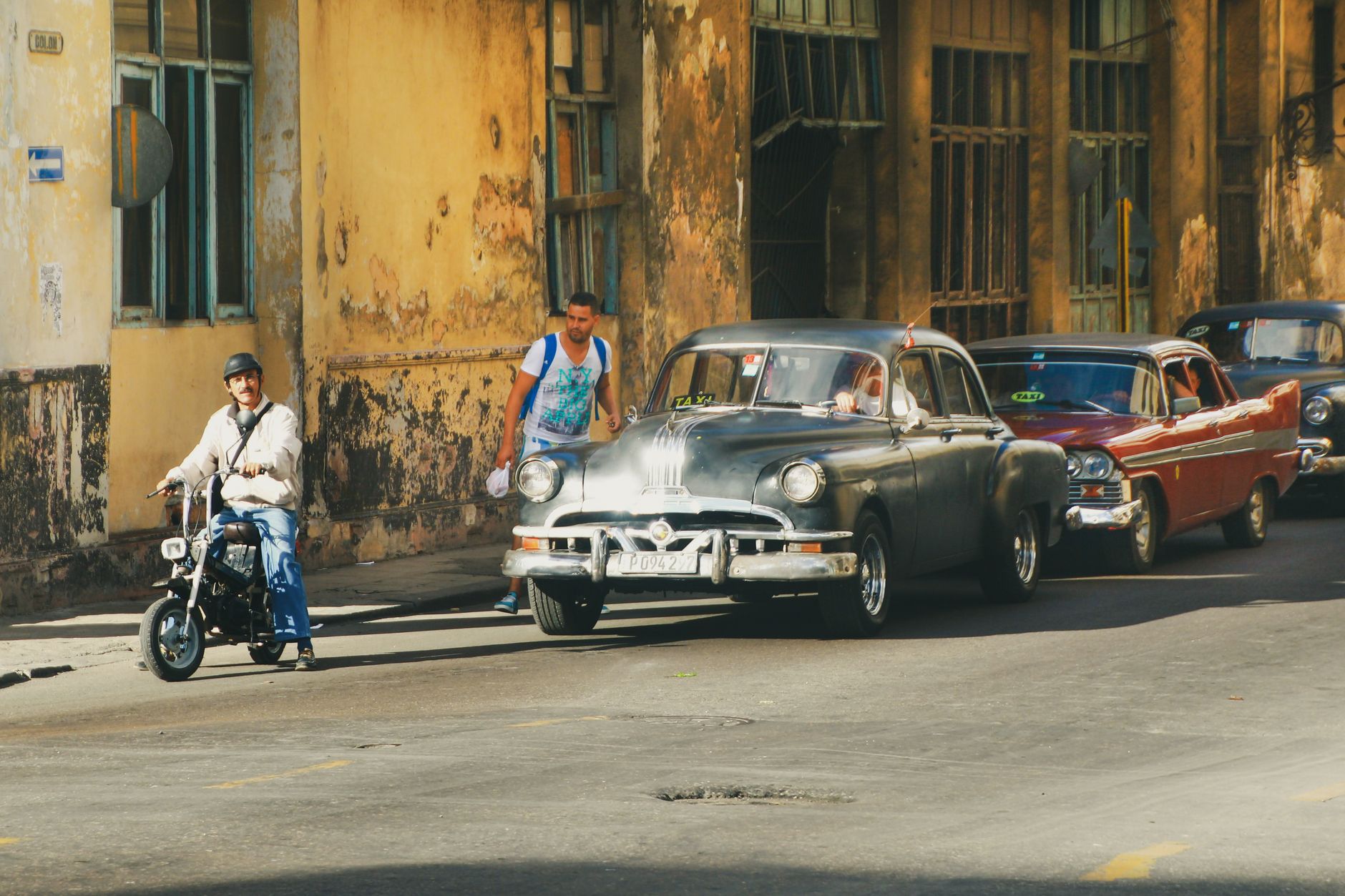
Super AdminIk heb al heel wat vreemde kleine machines onder handen gehad, maar de Whizzer weet me nog steeds te pakken. Het begon als een motortje dat je op een gewone fiets kon monteren, gebouwd door een bedrijf dat vooral vliegtuigonderdelen maakte, en op de een of andere manier is het uitgegroeid tot een van de charmantere en steeds waardevollere hoekjes van de klassieke scene. Het damesmodel heeft een verhaal dat het vertellen waard is, zeker de zeldzame Europees gebouwde versie die je veel te weinig tegenkomt.
Van vliegtuigonderdelen naar fietsmotortjes
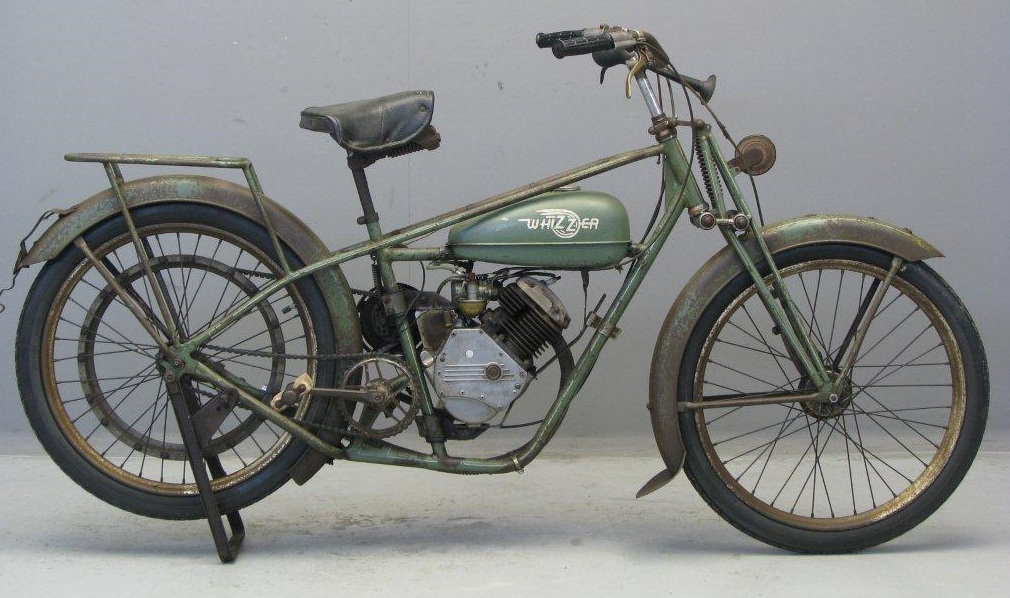
Whizzer gaat terug tot 1939 en Breene-Taylor Engineering, een bedrijf uit Los Angeles dat onderdelen voor vliegtuigen bouwde, geen motoren. Hun hulpmotortje voor fietsen verkocht in het begin bescheiden, zo'n 2.500 stuks tegen 1942, voordat Dietrich Kohlsatt en Martin Goldman het bedrijf dat jaar overnamen en er veel meer van maakten.
De timing was belangrijk. Tijdens de oorlog lobbyde Whizzer bij de Amerikaanse overheid om de productie door te laten gaan, met als argument dat hun motortjes defensiearbeiders naar hun ploegendienst brachten op een moment dat brandstof en nieuwe auto's allebei schaars waren. Dat argument werkte, en het zette het bedrijf klaar voor de bloeiperiode die volgde na de oorlog.
De naoorlogse bloeiperiode
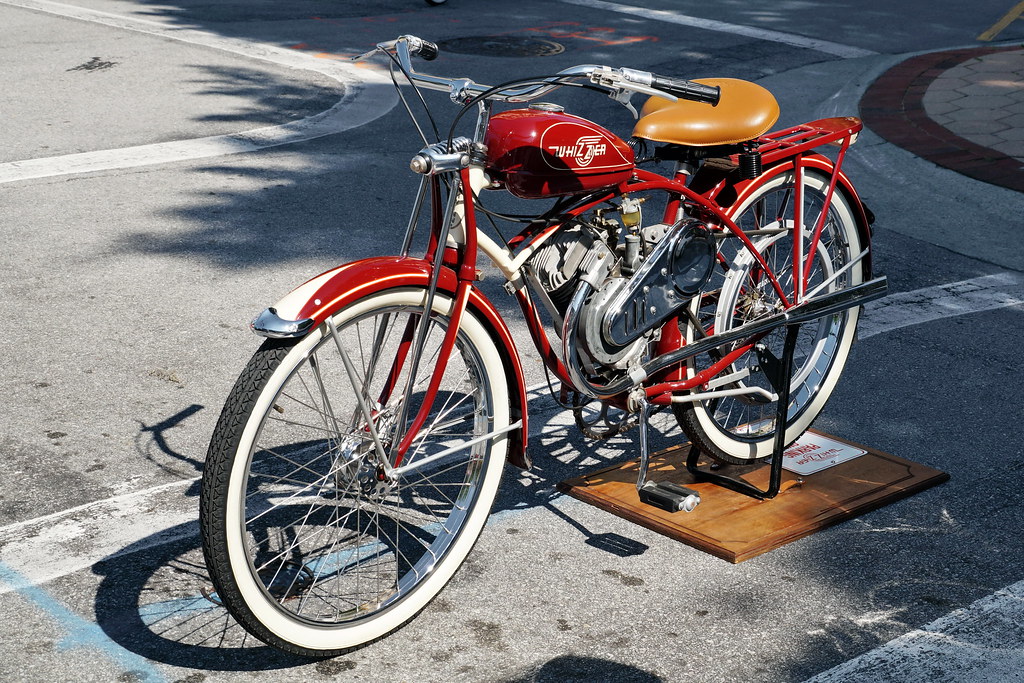
Eind jaren veertig en de jaren vijftig waren Whizzers echte hoogtepunt. De voorgemonteerde Pacemaker verscheen in 1948 voor 199,50 dollar, en de Sportsman uit 1949 volgde met zijn 138cc-motor en een optionele tweeversnellingsbak, geprijsd tussen 224,50 en 239,50 dollar. Voor veel mensen was dat oprecht betaalbaar vervoer, op een moment dat een auto dat nog niet was.
Sportsman (1949)
De Sportsman is het model waar verzamelaars het vaakst naar wijzen als het hoogtepunt van de oorspronkelijke productie - het is degene met de optionele versnellingsbak en de cilinderinhoud die latere Whizzers, inclusief de Europees gebouwde exemplaren, zouden overnemen. De productie liep door tot 1965, toen een steeds competitievere markt voor fietsmotortjes het bedrijf uiteindelijk inhaalde. Er was een kleinere heropleving tussen 1997 en 2009, maar de originelen uit het gouden tijdperk zijn wat verzamelaars daadwerkelijk najagen.
Een frame gebouwd voor vrouwelijke rijders
Het damesmodel was geen bijgedachte die zomaar op de standaardfiets werd geplakt - het kreeg een echt verlaagd, doorstapframe zodat een rijdster in een rok er zonder gedoe op en af kon stappen, met behoud van dezelfde motor en dezelfde prestaties als de standaardversie. Het omarmde de strakke lijnen en aangename kleurencombinaties van die tijd in plaats van zich te verontschuldigen voor het praktische karakter.
Die combinatie is precies waarom deze fietsen nog steeds koppen doen draaien: ze waren ontworpen om bereden te worden door iedereen die een betaalbare, stijlvolle manier zocht om zich te verplaatsen, niet afgezwakt omdat ze op vrouwen gericht waren.
De Luxemburgse connectie
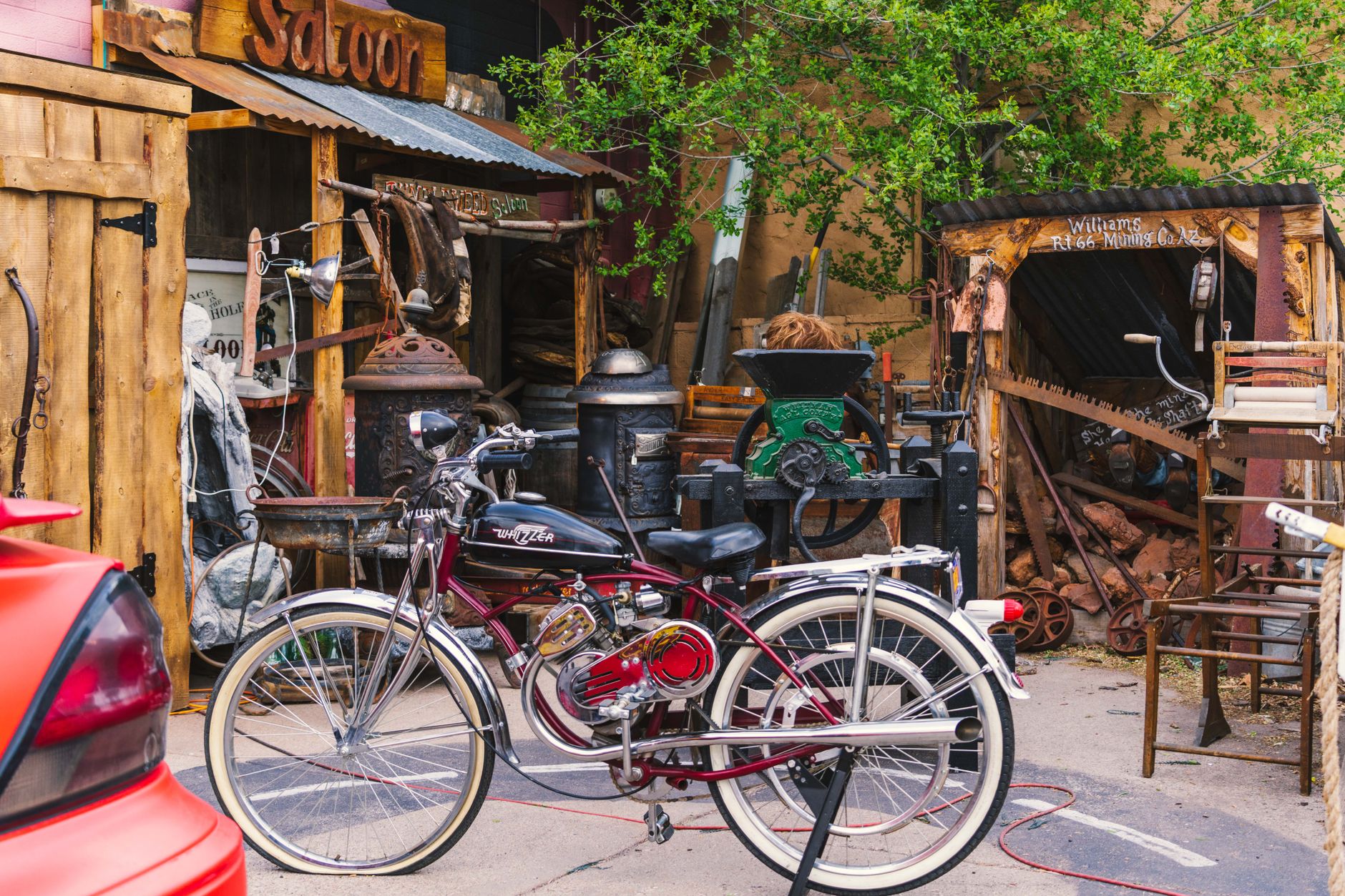
De meeste mensen zien Whizzer als een puur Amerikaans verhaal, en dat is het grotendeels ook - maar er was ook echte licentieproductie in Europa. Een Whizzer Luxembourg-model bestond al in 1947, gebouwd onder licentie voor de Europese markt met een eigen lokale specificatie.
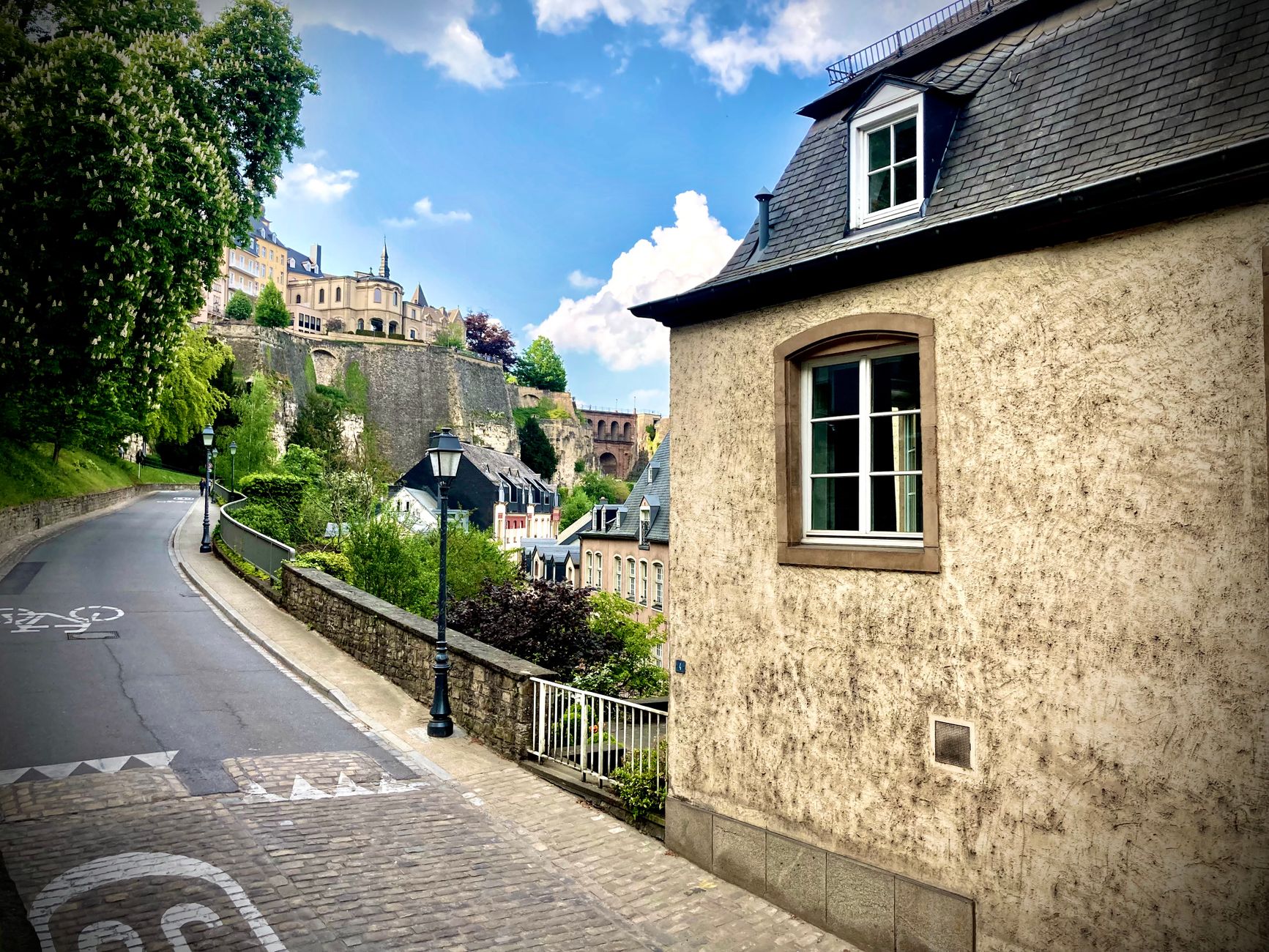
We kregen onlangs precies zo'n overlever binnen: een Luxemburgs gebouwd Whizzer-damesmodel uit 1950, uitgerust met de 138cc L300-zijklepmotor en nog altijd getooid met zeventig jaar eerlijke, originele patina. Zulke motoren duiken zelden op - de Luxemburgse productie was al klein, en een damesmodel uit die reeks, compleet en daadwerkelijk rijdend, vind je niet zomaar twee keer.
Wat ze vandaag daadwerkelijk waard zijn
Recente resultaten geven een goed beeld van de bandbreedte. Typische Whizzer-verkopen liggen ergens tussen de 1.800 en 2.200 dollar, met een breder gemiddelde van rond de 3.150 dollar. Maar de bovenkant reikt veel verder - een goed gedocumenteerd exemplaar bracht in mei 2023 14.700 dollar op, en veilinghuizen als Mecum en RM Sotheby's hebben de afgelopen jaren beide Whizzers verkocht in de bandbreedte van 6.600 tot 8.800 dollar.
Wat die cijfers uit elkaar houdt, is bijna altijd hetzelfde handjevol dingen: of de originele motor nog draait, of de lak en verlichting periode-correct zijn in plaats van reproductie, en hoe compleet de fiets is - spatborden, tank, badges, al die kleine onderdelen die makkelijk verloren gaan over zeventig-plus jaar.
Zo'n exemplaar kopen
Een paar dingen zijn het controleren waard voordat je je vastlegt op een vooroorlogse of naoorlogse Whizzer, damesmodel of niet:
Papieren - veel van deze machines, zeker Europees gebouwde exemplaren, komen zonder enige registratiegeschiedenis. Dat is niet automatisch een dealbreaker, maar je moet precies weten wat je koopt vóórdat je biedt, niet erna. We schreven een uitgebreider stuk over waarom documentatie ertoe doet bij het verzamelen van klassieke motoren als je het volledige plaatje wil.
Patina versus restauratie - een eerlijk, ongerestaureerd exemplaar met echte ouderdom op de lak is voor serieuze verzamelaars vaak meer waard dan een fiets die opnieuw gespoten is. Twijfel je over die keuze, dan loodst onze gids van schuurvondst naar showroom je door wat écht waarde toevoegt en wat gewoon kosten toevoegt.
Herstart na stilstand - een Whizzer die jarenlang heeft stilgestaan heeft bijna altijd een schoongemaakte carburateur, een doorgespoeld brandstofsysteem en een gecontroleerde ontsteking nodig voordat hij betrouwbaar loopt. Ons stuk over een motor die jarenlang heeft stilgestaan weer opstarten behandelt de juiste volgorde om dat te doen zonder extra schade te veroorzaken.
Het Whizzer damesmodel is een vreemd, prachtig stukje geschiedenis - het fietsmotortje van een vliegtuigonderdelenbedrijf dat uitgroeide tot echt vervoer, en daarna tot een ontwerp dat mensen driekwart eeuw later nog steeds charmant vinden. Wil je zien hoe zo'n exemplaar er in het echt uitziet, kijk dan even op onze pagina met live veilingen.

Comment (00)