




 Datum:
22 Aug, 2026
Datum:
22 Aug, 2026 Classic Motorcycles
 Geplaatst door
Super Admin
Geplaatst door
Super AdminZo nu en dan word ik gevraagd of de 916 zijn geld nog waard is, meestal door iemand die net een restauratievideo heeft gezien en de kriebels heeft gekregen. Mijn antwoord is al jaren hetzelfde: ja, maar alleen als je weet wat je koopt, want "een Ducati 916" omvat een veel breder scala aan motoren en prijzen dan de silhouet doet vermoeden.
Massimo Tamburini's ontwerp ziet er nog steeds uit alsof het vorige week getekend is, niet in 1994. Dat alleen al verklaart waarom de 916 het verzamelaarsgesprek nooit echt heeft verlaten, zoals sommige van zijn tijdgenoten uit de jaren negentig wel deden.
Welke 916 je nu eigenlijk voor je hebt
Het embleem op de staart is op alle vier de wezenlijk verschillende motoren hetzelfde, en het prijsverschil daartussen is enorm.
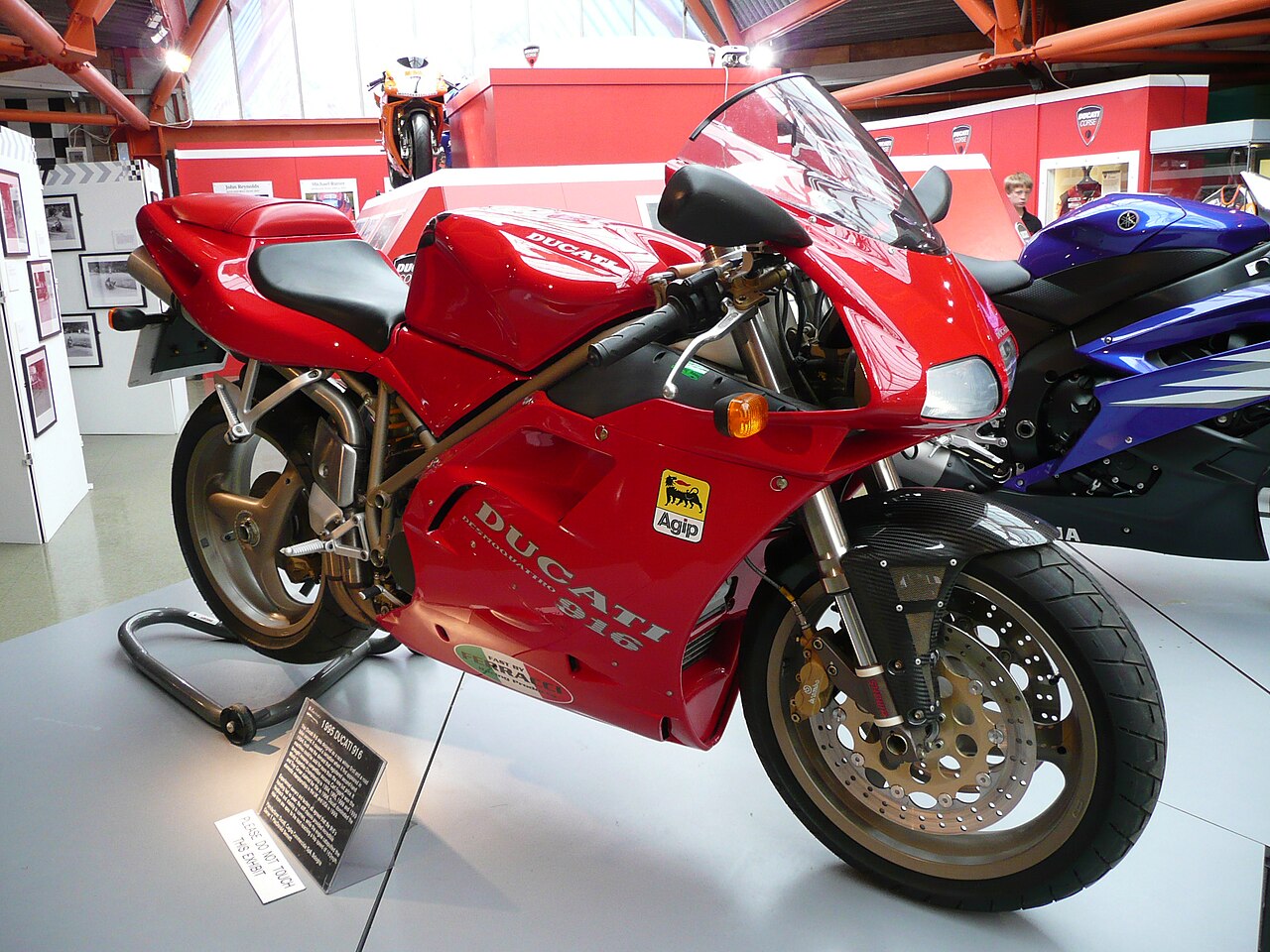
Biposto
De basis tweezits wegmotor, en degene die je het vaakst tegenkomt. Mechanisch identiek op de punten die er in het dagelijks gebruik toe doen, en met afstand de goedkoopste toegang tot eigenaarschap.
Strada
Een iets zachtere, meer toergerichte eenzitsvariant in sommige markten. De waarde volgt die van de Biposto op de voet - kopers betalen hier voor staat en geschiedenis, niet voor het label.
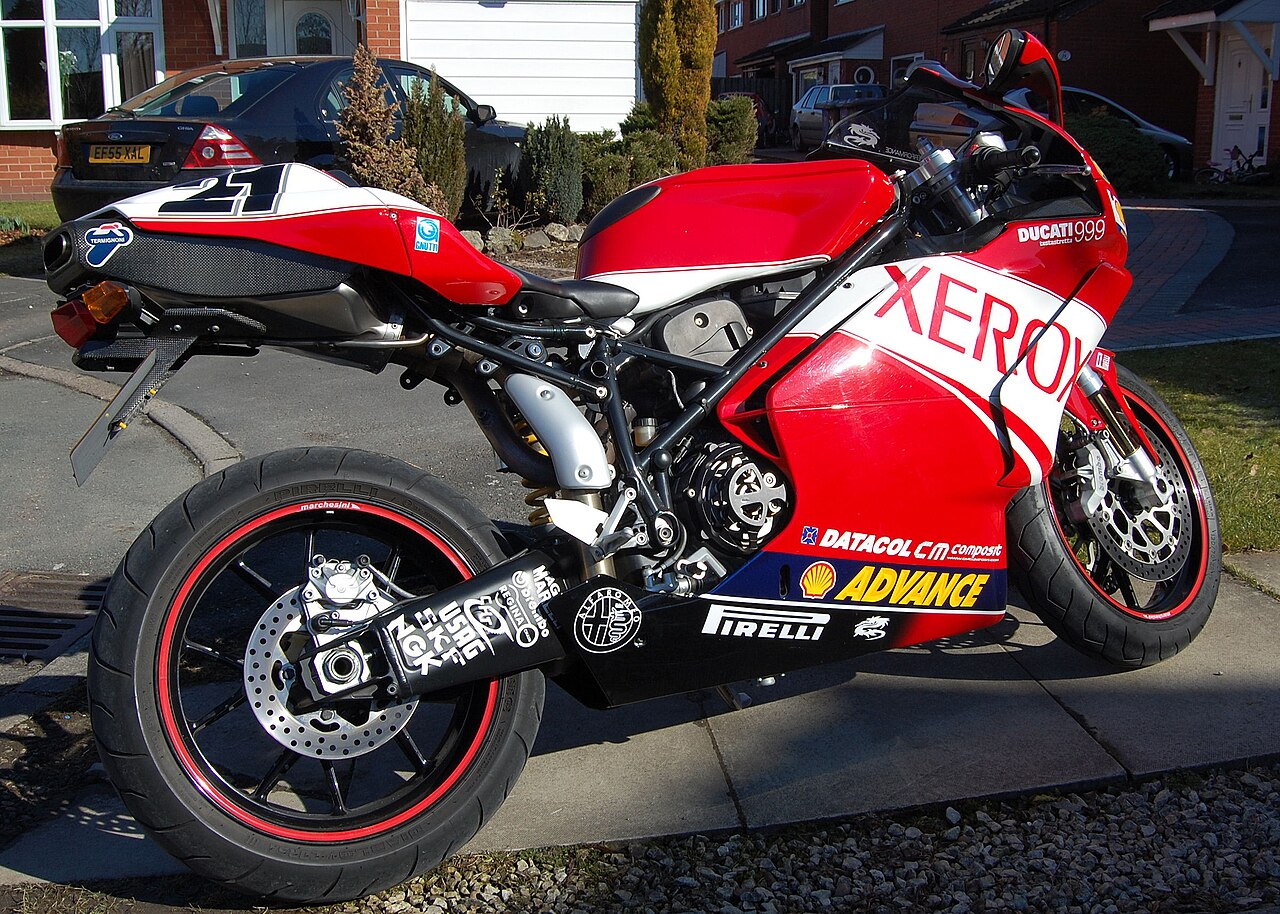
SPS
Sport Production, in kleinere aantallen gebouwd met een grotere boring, betere vering en het soort fabrieksaandacht dat daadwerkelijk merkbaar is in hoe de motor rijdt. Dit is degene waar liefhebbers gericht naar op zoek gaan.
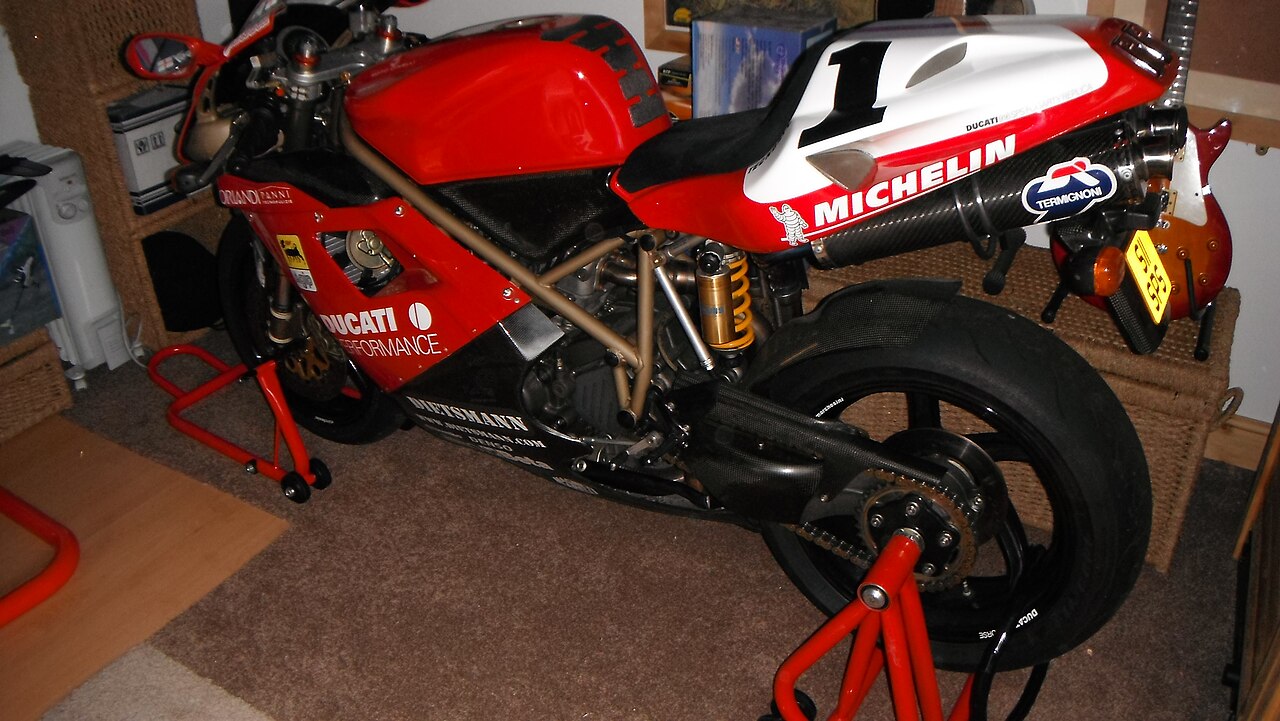
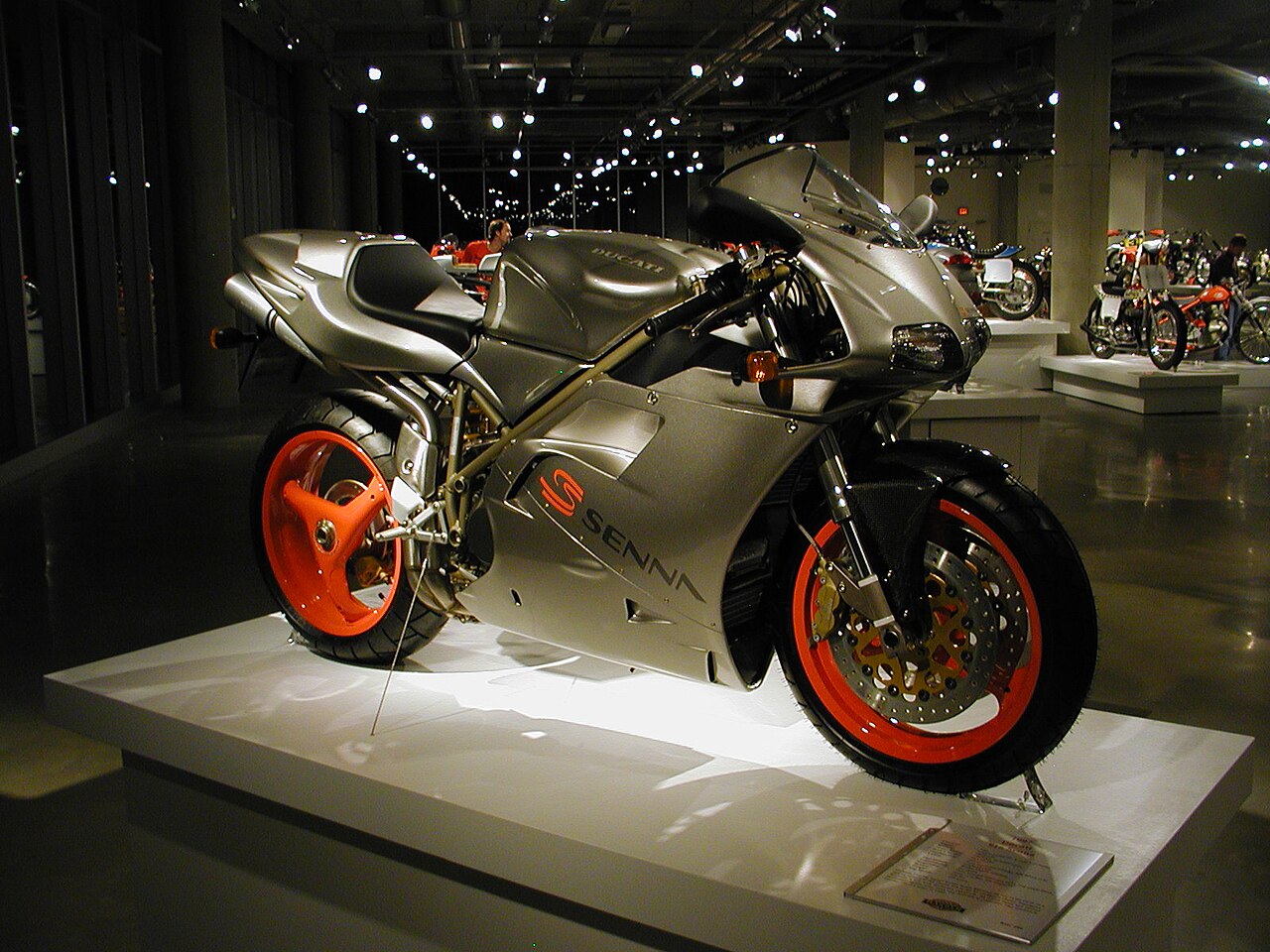
Senna Edition
Vernoemd naar Ayrton Senna, gebouwd in drie gelimiteerde series, en daarnaar geprijsd. Vind je een echte met matching numbers en een schone geschiedenis, dan is dat een heel ander verhaal dan de andere drie.
De distributieriem-vraag die iedereen stelt
Ja, het is een reëel punt, en nee, het is niet het horrorverhaal dat internetforums ervan maken. Het fabrieksinterval is twee jaar of zo'n 16.000 kilometer, wat het eerst komt, en de riemen zelf zijn goedkoop. Wat echt geld kost, is het interval overslaan - een gebroken distributieriem op een desmodromische motor kan eindigen in een volledige revisie, en die rekening is niet klein. Vraag om het papierwerk. Kan de verkoper niet laten zien wanneer de riemen voor het laatst zijn vervangen, begroot het dan zelf voordat je ergens mee gaat rijden.
Elektrische kwaaltjes om te checken voordat je koopt
De regelaar-gelijkrichter is het onderdeel dat ik zou checken nog voordat ik naar de lak keek. Vroege units waren gevoelig voor storingen, en een motor waar nooit de verbeterde versie op gemonteerd is, kan zich uiten in slecht starten, een vermoeide startmotorkoppeling, en in zeldzame ongelukkige gevallen een reëel brandrisico. Laat een monteur bevestigen dat de verbeterde unit gemonteerd is, en check meteen de accu - een 916 met een marginaal laadsysteem verbergt het probleem met plezier tot het moment dat het dat niet meer doet.
Wat deze motoren in 2026 werkelijk kosten
De prijzen zijn blijven stijgen, maar niet gelijkmatig over het hele gamma.
Instapniveau
Een nette Biposto met een eerlijke geschiedenis is realistisch gezien de goedkoopste manier om in te stappen, met ruwere exemplaren die opduiken voor ruim minder dan de helft daarvan.
De sweet spot
Goede SPS-exemplaren vragen een echte meerprijs boven een standaard Biposto, en het is een terechte meerprijs - de verbeteringen zijn niet alleen cosmetisch.
De uitschieter
Senna Editions zijn verkocht van de hoge twintigduizenden tot de hoge vijftigduizenden dollar, afhankelijk van staat en originaliteit, en de zeldzaamste fabriekshomologatie-specials hebben dit jaar alleen al cijfers boven de zestigduizend dollar aangeraakt. Dat is geen typefout, en het vertelt je waar serieuze verzamelaars denken dat deze markt naartoe gaat.
Is hij het nog waard
Ik denk het wel, met een kanttekening: koop de specifieke motor, niet het label. Een goed gedocumenteerde Biposto met verse riemen en een gezond laadsysteem geeft je meer oprecht plezier dan een goedkope SPS met een onbekende onderhoudsgeschiedenis. De 916 beloont kopers die hun huiswerk doen en straft degenen die vallen voor de vorm en het papierwerk overslaan.
Fotocredit: Ronald Saunders from Warrington, UK (CC BY-SA 2.0), Ferdagio (CC BY-SA 4.0), MikeSchinkel on Flickr.com, MikeSchinkel.com (CC BY 2.0), This photo was taken by Przemysław JahrAutorem zdjęcia jest Przemysław JahrWykorzystując zdjęcie proszę podać jako autora:Przemysław Jahr / Wikimedia Commons (Public domain)



enegaks
1 dag geledenЗдесь ресурсе можно найти важную информацию. https://pilot-club.ru/info/2026-07-15-gcds-raskryvaet-vesnu-leto-2026-ot-milanskogo-mramora-k-memnym-prostoram-zumerov/
enegaks
2 dagen geledenНа данном сайте есть шанс почерпнуть интересную информацию. https://relax-spb.ru/read-info/3385-evolyutsiya-muzhskogo-kostyuma-ot-klassiki-k-kezhualu.html